- Jul 2, 2025
How One Man's $3.24 Million FBAR Nightmare Could Have Been Avoided (And How You Can Protect Yourself)
- Treatywise.com
- 0 comments
The shocking true story of Yoram Ruimi's costly mistake—and the simple steps that could have prevented it.
Published July 2, 2025
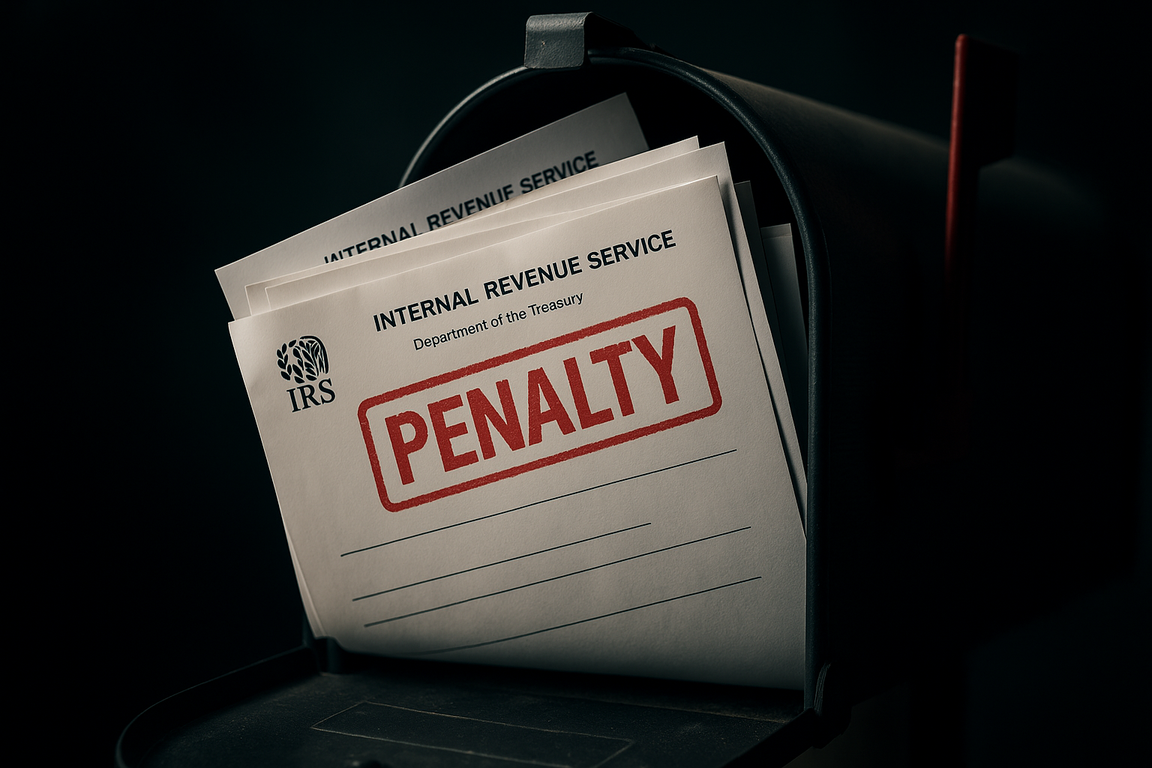
Last month, Yoram Ruimi learned the most expensive lesson of his life.
The dual Israeli-American citizen thought he could keep his foreign bank accounts under the radar. He was wrong. Dead wrong.
On June 11, 2025, a federal judge in Washington slammed him with a final judgment: $3.24 million in FBAR penalties, plus interest that pushed the total above $3.6 million.
All for failing to file a form that takes most people about 30 minutes to complete.
If you're an American with money overseas, Ruimi's nightmare should terrify you. Because what happened to him could happen to you, and it's happening to more Americans every single day.
How a Smart Businessman Made a $3 Million Mistake
Ruimi wasn't some sketchy tax evader hiding suitcases of cash. He was a legitimate businessman who sold his company in the year 2000 and deposited the proceeds in foreign banks. Pretty normal stuff.
Here's where it went sideways...
Instead of just opening accounts in his own name, Ruimi got fancy. He created offshore companies: Lauren Group in Belize, Sonarillo Investment Group in the British Virgin Islands. Then he used these entities to hold accounts at Bank Leumi in Israel and Baumann & Cie in Switzerland.
Again, none of this was illegal. Plenty of wealthy Americans use offshore structures for legitimate reasons.
But here's the catch: from 2011 to 2016, Ruimi never filed a single FBAR (Foreign Bank and Financial Accounts Report). Not one. For six straight years, he pretended these accounts didn't exist.
Why This Wasn't Just an "Oops" Moment
The government didn't buy Ruimi's "I forgot" defense. Federal prosecutors painted a picture of deliberate concealment:
Coordinated tax prep: Ruimi had a friend coordinate with his CPA on tax returns, yet somehow FBAR reporting never came up
Document shuffling: When investigators came knocking, key documents had mysteriously been shipped to Israel years earlier
Bank choice matters: He banked with Bank Leumi, which the DOJ had already busted for helping Americans hide money offshore (they paid $270 million in penalties in 2014)
Fighting discovery: Throughout the case, Ruimi fought tooth and nail against turning over bank records
Judge's conclusion? This was willful non-compliance. And willful FBAR violations carry penalties that can destroy you financially.
The FBAR Penalty Machine That Crushes Dreams
Here's what most Americans don't realize about FBAR penalties: they're not based on what you owe in taxes. They're based on your account balances. And they compound like a freight train.
For willful violations in 2025 (like Ruimi's case):
Penalty: $165,353 USD (the inflation-adjusted statutory maximum) OR 50% of your highest account balance (whichever is higher)
Applied to each account, each year
No upper limit
Let's say you have $500,000 USD in a Swiss account and forget to report it for three years. Your penalty isn't a few thousand dollars. It's potentially $750,000 USD (50% × $500k × 3 years).
For non-willful violations:
Up to $10,000 per year (thanks to a recent Supreme Court case that limited the damage)
Still painful, but survivable
The government only needs to prove their case by 51%. That's it. And with international banking agreements automatically sharing your information, they're finding unreported accounts faster than ever.
How the Government Found Ruimi (And How They'll Find You)
Ruimi probably thought he was safe. Israel seems friendly. Swiss banks are supposed to be secretive. His offshore companies added extra layers.
None of it mattered.
The U.S. has spent the last decade building the world's most sophisticated tax enforcement network:
FATCA reporting: Foreign banks must report American account holders or face massive penalties
Information sharing agreements: Countries automatically swap tax data
Bank cooperation programs: Remember Bank Leumi's $270 million settlement? They're now cooperating with U.S. investigations
AI and data mining: The IRS uses advanced algorithms to spot patterns in financial data
Your "secret" account isn't secret. It's just unreported. There's a big difference.
The Ruimi Defense Strategy That Backfired
When the government came after Ruimi, he tried every trick in the book:
"The accounts weren't mine": He claimed the offshore entities owned the accounts, not him. Problem: he was the sole shareholder and controlled everything.
"You're fishing": He argued the government's document requests were too broad. The judge disagreed and ordered him to comply.
"I'm too busy": He cited the Israel-Hamas conflict and his children's military service as reasons for delays. The court wasn't sympathetic.
"This is too complicated": After months of fighting, Ruimi essentially gave up, telling the court no resolution would be possible "for many months or years."
Every delay tactic just made things worse. The penalties kept growing. The legal fees kept mounting. And in the end, he lost everything anyway.
Your Exit Ramp Before It's Too Late
Here's the thing about FBAR enforcement: timing is everything. Come forward voluntarily, and you have options. Get caught first, and you're at the government's mercy.
If you're clean: File your FBARs on time, every year. The form is free and takes minutes to complete.
If you've missed filings but owe no taxes: The Delinquent FBAR Submission Procedures might get you off with a warning.
If your violations were innocent mistakes: Streamlined Filing Compliance offers reduced penalties (sometimes zero for overseas residents).
If you were willfully hiding money: The Voluntary Disclosure Practice can protect you from criminal prosecution and cap your penalties.
If you wait too long: You could end up like Ruimi, facing millions in penalties with no good options left.
The One Thing You Must Never Do
Whatever you do, don't try a "quiet disclosure", filing amended returns and late FBARs without going through official IRS programs. The government considers this "gaming the system" and can hit you with maximum penalties.
Ruimi learned this lesson the hard way. So have thousands of other Americans who thought they could outsmart the system.
Don't Become the Next $3 Million Horror Story
Every week, I see Americans who thought their foreign accounts were safe. Swiss numbered accounts. Caribbean shell companies. Middle Eastern banking relationships. None of it provides protection anymore.
The question isn't whether the government will find your accounts. The question is whether they'll find them before or after you voluntarily come forward.
Ruimi rolled the dice and lost $3.24 million. How much are you willing to risk?
Ready to get compliant before it's too late?
Our FBAR Compliance Kit gives you everything you need to understand your options and take action:
✅ Step-by-step filing instructions that eliminate guesswork
✅ Penalty mitigation strategies used by top tax professionals
✅ Compliance program comparison guide to choose your best option
✅ Documentation checklists to ensure complete submissions
✅ Real case studies showing successful compliance outcomes
✅ Template letters and forms for professional submissions
Don't wait until they find you first.
Get Your FBAR Compliance Kit Now →
The next Ruimi-style penalty case could be yours. Or you can take control today and protect your financial future.
The choice is yours.
This article is for educational purposes and doesn't constitute legal advice. FBAR situations vary widely, and you should consult qualified professionals for your specific circumstances.